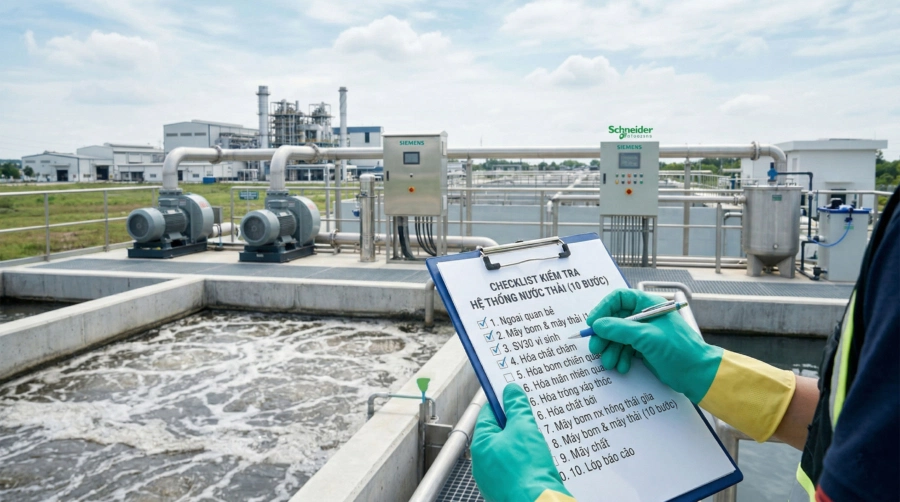
Effective Microorganism Cultivation: Standard Process to Help the Wastewater Treatment System Stable for 24 Hours
Operating a wastewater treatment system is like caring for a living organism. If you do not understand the technical effective microorganism cultivation methods, the entire system may fall into a state of “paralysis,” leading to contaminated output and recovery costs that can reach hundreds of thousands of dollars.
Why Does Correct Microorganism Cultivation Determine the Fate of Your Treatment Plant?
In a wastewater treatment environment, microorganisms act as silent biological “workers” that decompose organic matter. However, unlike mechanical equipment, microbes require a strict living environment. If you simply pour microbial products into a tank without controlling the parameters, they will suffer shock and die before they can multiply. Successful effective microorganism cultivation requires an absolute balance between nutrients (food), oxygen concentration, and environmental factors such as pH and temperature.

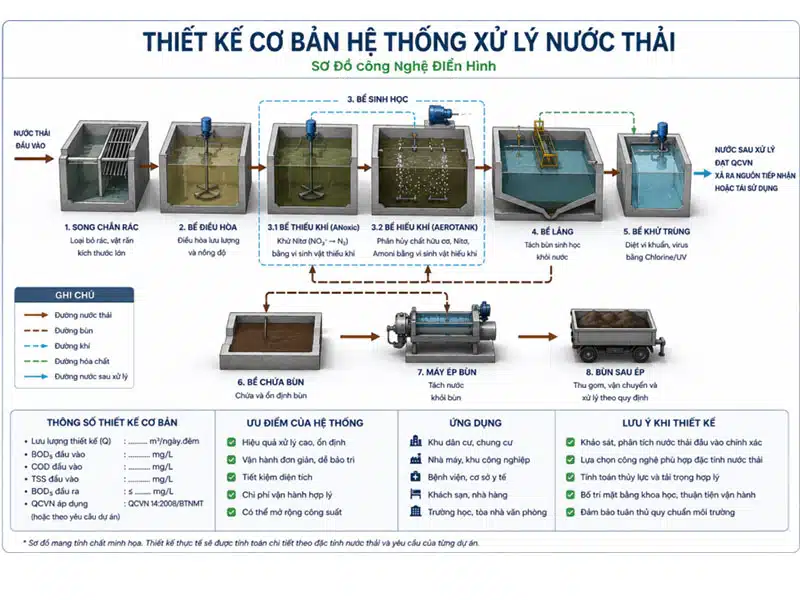
The 5-Step Procedure for Aerobic Microorganism Cultivation in Aerotank
To achieve the highest efficiency in effective microorganism cultivation, you must strictly adhere to the following technical roadmap:
- Check Environmental Conditions: Ensure the pH is within the 6.5 – 8.5 range and the temperature is between 25°C – 35°C. This is the “safe zone” for bacterial strains to begin growth.
- Activate the Aeration System: Dissolved Oxygen (DO) must be maintained at 2 – 4 mg/L. Without sufficient oxygen, aerobic microbes will enter a dormant state or die off in mass.
- Add Specialized Microbial Products: Select product lines suitable for the specific type of wastewater (domestic, industrial, or food processing).
- Provide “Food” (Nutrients): Apply the golden ratio of C:N:P = 100:5:1 Molasses is often used to supplement easily consumable carbon sources, helping to activate microbes quickly.
- Monitor Growth: Observe the sludge color (golden brown is ideal) and measure the MLSS concentration periodically to adjust the loading rate.
Common Mistakes That Cause Microbial Shock and Mass Death
Many operators wonder why they apply the correct effective microorganism cultivation methods yet the sludge still disintegrates or foams. The cause usually lies in sudden load changes or toxic concentrations (such as residual chlorine or heavy metals) exceeding thresholds. Additionally, prolonged nutrient deficiency causes microbes to self-decompose to survive, leading to “pin-point” sludge that settles poorly and results in turbid effluent.
Differentiation Hook: Don’t Just Grow, “Train” Your Microbes
A common mistake is trying to force microbes to grow too fast by dumping in excessive amounts of molasses. In reality, a smart effective microorganism cultivation strategy involves “training” them to consume the specific pollutants present in your factory’s wastewater. Gradually increase the ratio of influent wastewater instead of relying solely on artificial nutrient sources. This helps microbes produce specific enzymes to decompose difficult compounds right from the initial stage.
Real-World Evidence and Expert Authority (E-E-A-T)
According to industrial wastewater treatment research, controlling the SVI (Sludge Volume Index) within the 80 – 120 range is a sign of a successful effective microorganism cultivation process. In large-scale textile wastewater projects, maintaining an activated sludge concentration of 2500 – 3500 mg/L helps the system meet “Grade A” standards after only 15 – 21 days of operation.
FAQ – Quick Guide to Microorganism Cultivation
- How long does it take for the water to meet standards? Typically, a standard effective microorganism cultivation procedure takes 7 to 21 days for the microbial system to adapt and reach stable treatment density.
- Why does the Aerotank show white foam during the early stages? This is normal at the start of effective microorganism cultivation, caused by microbes not yet being strong enough to handle the organic load or excessive aeration. The foam will dissipate once the microbial floc is fully formed.
- How do I know if the microbes are healthy? Healthy microbes produce golden-brown sludge with a characteristic earthy smell that settles quickly after 30 minutes in a graduated cylinder.
- Is regular microbial supplementation necessary? If the system is stable and the load remains constant, regular supplementation is not required. However, in the event of a system failure or process change, re-applying effective microorganism cultivation is essential.
Conclusion: Mastering effective microorganism cultivation not only saves businesses money on chemicals but also ensures legal environmental compliance. If you are struggling to stabilize your system, check your DO and nutrient levels today!